
Carbon Element Brochure
Carbon Element Brochure - You need not include all of the above. Carbon enters the biosphere when photosynthetic organisms use the sun’s energy to transform co2 into organic molecules, which are transferred to primary consumers. Element brochure* you will be assigned an element to research. One type of information you will find about your element is the element’s various chemical and physical properties. Your goal will be to get people interested in your element by emphasizing properties. It is very important that you. Carbon, an element of prehistoric discovery, is very widely distributed in nature. With a melting temperature of 3500 °c (3773 k,. It combines innovative spirit and technological expertise with exceptional. Its name origins from latin carbo and french charbon. Schunk carbon technology focuses on development, manufacture and application of carbon and ceramic solutions. One type of information you will find about your element is the element’s various chemical and physical properties. With a melting temperature of 3500 °c (3773 k,. It is found in abundance in the sun, stars, comets, and atmospheres of most planets. It is found in abundance in the sun, stars, comets, and atmospheres of most planets. Several examples of properties are: After researching the element, you will create a brochure to present the information to the class. Analysis of carbon materials is crucial for raw material and electrode manufacturers, suppliers for batteries, electric vehicle manufacturers, and other users of carbon raw materials. In this activity, students will research a common element from the periodic table and create a brochure about it. This document provides instructions for creating an element brochure. It is found in abundance in the sun, stars, comets, and atmospheres of most planets. Students are assigned an element and must include specific information about the element's properties, history of. It is very important that you. Students will include information about its atomic structure,. Carbon, glassy carbon, and nanotubes (figure 1). Carbon is present as carbon dioxide. Students will include information about its atomic structure,. Element brochure* you will be assigned an element to research. It is found in abundance in the sun, stars, comets, and atmospheres of most planets. Your goal will be to get people interested in your element by emphasizing properties. Element brochure* you will be assigned an element to research. Carbon is a chemical element with symbol \(c\), atomic number of 6, and electron configuration of [he]2 \(s^{2}2p^{2}\). This document provides instructions for creating an element brochure. Carbon is the fourth most abundant element in the universe. After researching the element, you will create a brochure to present the information. It combines innovative spirit and technological expertise with exceptional. Analysis of carbon materials is crucial for raw material and electrode manufacturers, suppliers for batteries, electric vehicle manufacturers, and other users of carbon raw materials. Carbon in the form of. Explore detailed information on carbon (c) element properties, facts, uses, history and periodic table trends. Diamond is an excellent abrasive because. Explore detailed information on carbon (c) element properties, facts, uses, history and periodic table trends. Diamond is an excellent abrasive because it is the hardest common material and it also has the highest. Physical and chemical properties of carbon: Carbon in the form of. With a melting temperature of 3500 °c (3773 k,. It is very important that you. Physical and chemical properties of carbon: Carbon is a chemical element with symbol \(c\), atomic number of 6, and electron configuration of [he]2 \(s^{2}2p^{2}\). Carbon in the form of. Your goal will be to get people interested in your element by emphasizing properties. It is found in abundance in the sun, stars, comets, and atmospheres of most planets. After researching the element, you will create a brochure to present the information to the class. Carbon, glassy carbon, and nanotubes (figure 1). Carbon is present as carbon dioxide. Carbon is a group 14 element and is distributed very widely in nature. Carbon is a polyatomic nonmetal with a hexagonal crystal structure that reaches its boiling point at 4827 °c, or 5100 k (8721 °f). Carbon is the fourth most abundant element in the universe. It combines innovative spirit and technological expertise with exceptional. Students are assigned an element and must include specific information about the element's properties, history of. Carbon, an. Carbon, an element of prehistoric discovery, is very widely distributed in nature. It is found in abundance in the sun, stars, comets, and atmospheres of most planets. General data, thermal properties, ionization energies, isotopes, reduction potentials, abundance of elements, crystallographic data. One type of information you will find about your element is the element’s various chemical and physical properties. The. It combines innovative spirit and technological expertise with exceptional. With a melting temperature of 3500 °c (3773 k,. Several examples of properties are: Carbon, an element of prehistoric discovery, is very widely distributed in nature. Carbon is present as carbon dioxide. Analysis of carbon materials is crucial for raw material and electrode manufacturers, suppliers for batteries, electric vehicle manufacturers, and other users of carbon raw materials. Students are assigned an element and must include specific information about the element's properties, history of. Explore detailed information on carbon (c) element properties, facts, uses, history and periodic table trends. Carbon enters the biosphere when photosynthetic organisms use the sun’s energy to transform co2 into organic molecules, which are transferred to primary consumers. The new updated version released today (wednesday 3 november 2021) graphically highlights the problems of carbon in our world now. Schunk carbon technology focuses on development, manufacture and application of carbon and ceramic solutions. General data, thermal properties, ionization energies, isotopes, reduction potentials, abundance of elements, crystallographic data. In this activity, students will research a common element from the periodic table and create a brochure about it. Photographs and descriptions of many samples of the element carbon in the periodic table. Carbon is a chemical element with symbol \(c\), atomic number of 6, and electron configuration of [he]2 \(s^{2}2p^{2}\). Its name origins from latin carbo and french charbon. Carbon, an element of prehistoric discovery, is very widely distributed in nature. It combines innovative spirit and technological expertise with exceptional. Element brochure* you will be assigned an element to research. Several examples of properties are: Your goal will be to get people interested in your element by emphasizing properties.
Atomic Structure Of Carbon Element Symbol Atomic Number And Atomic Mass
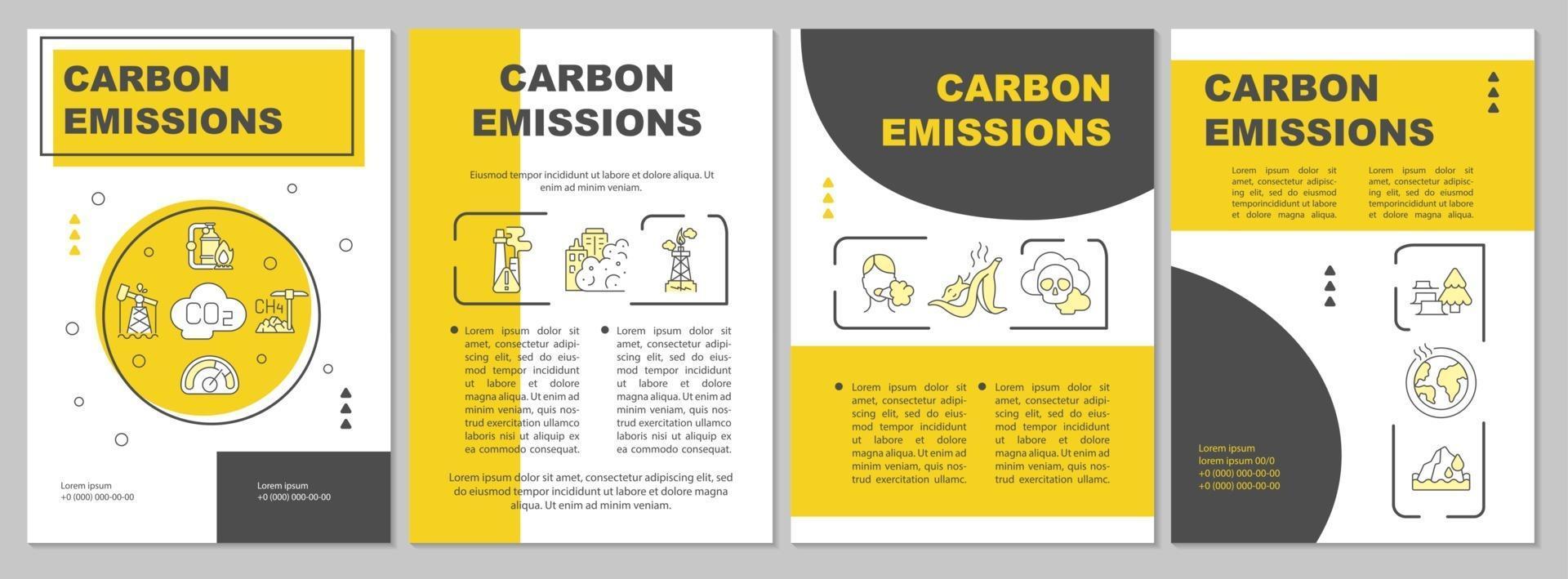
Carbon emissions brochure template. Natural, anthropogenic sources

A Slick New Brochure Design for Carbon Resources Robert Rusnak
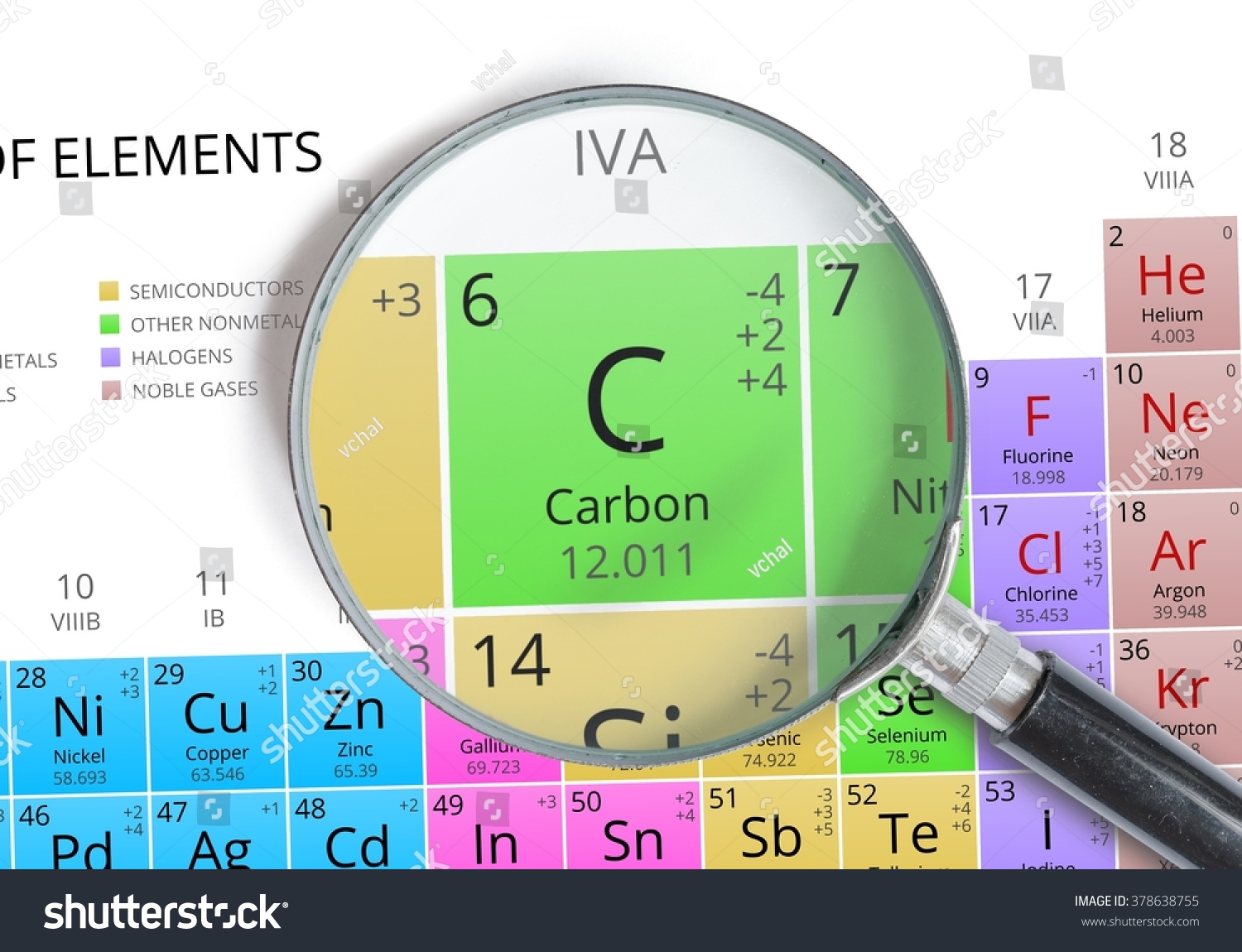
Carbon Element Mendeleev Periodic Table Magnified Stock Photo 378638755
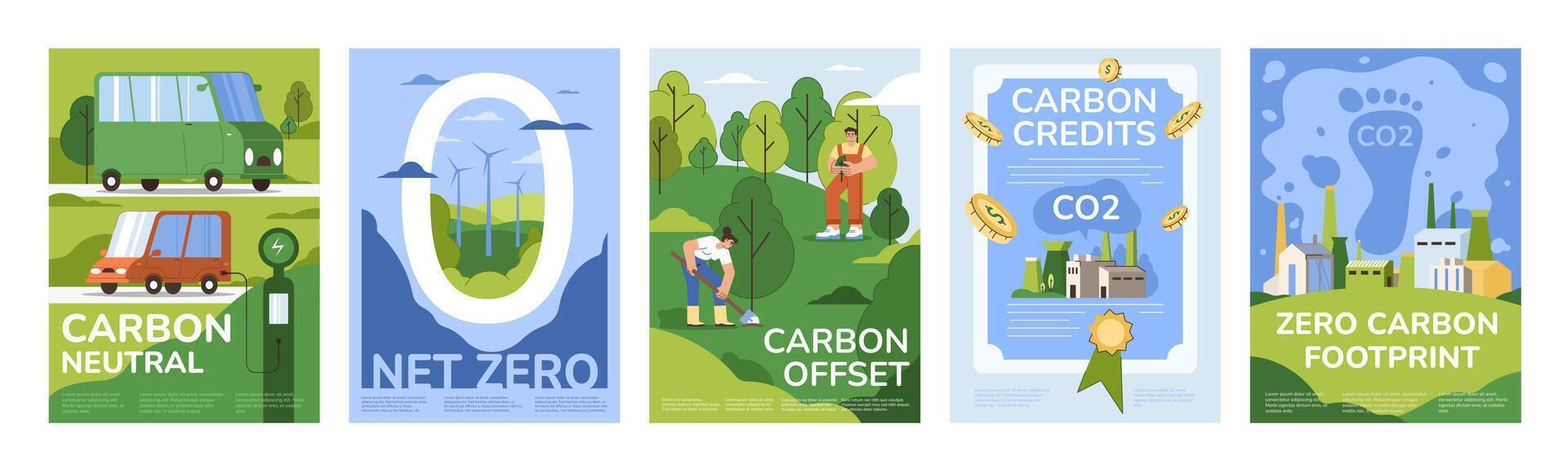
Set of brochure or poster of net zero emissions, carbon neutral or

Carbon An Element With Chemical Symbol Atomic Number And Atomic Mass

The Carbon Element Carbon element, Element chemistry, Chemistry projects

Carbon Carbon element, Chemistry projects, High school science projects
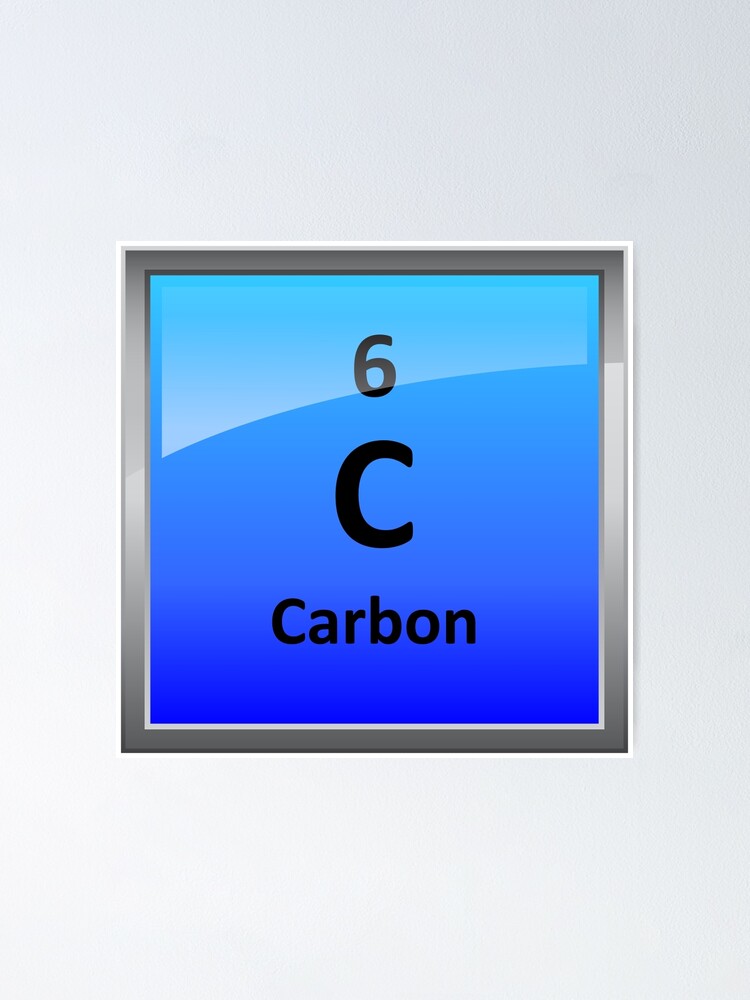
"Carbon Element Tile Periodic Table" Poster for Sale by sciencenotes
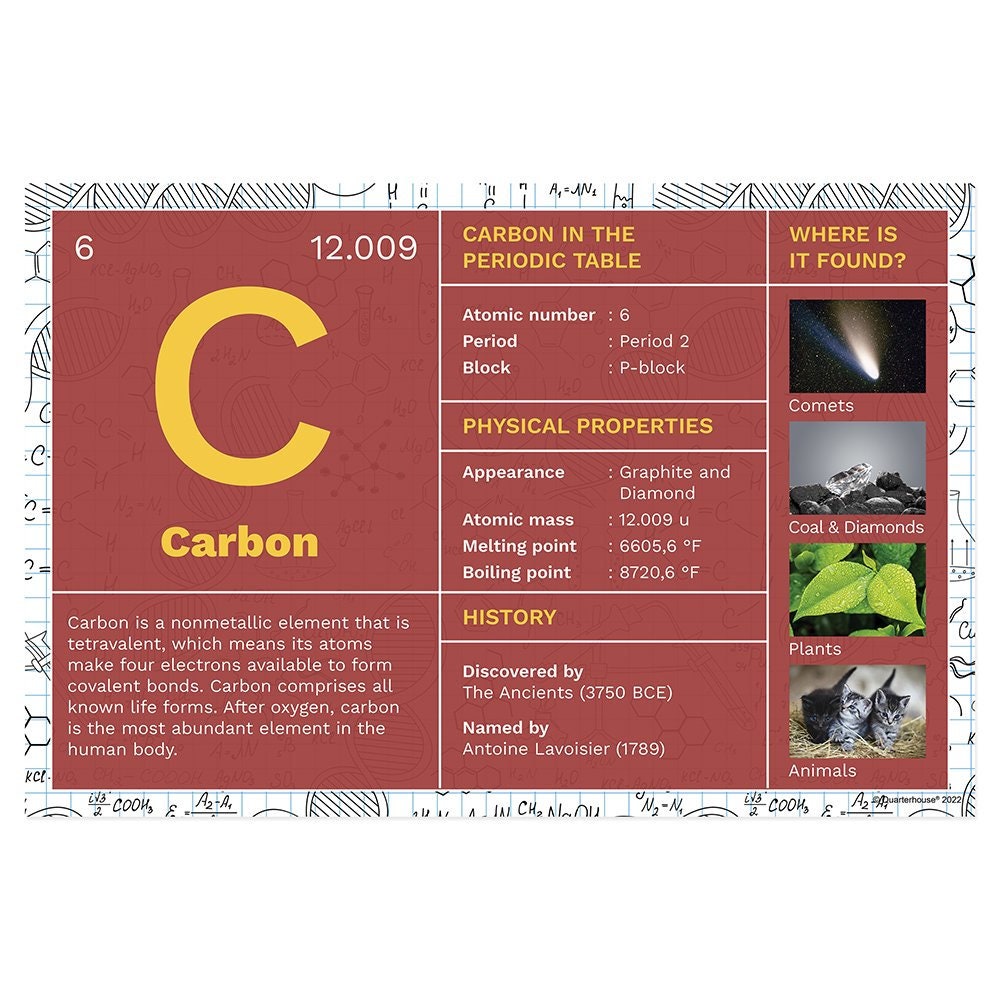
Quarterhouse Periodic Table of Elements Carbon Poster, Science
Carbon Is A Polyatomic Nonmetal With A Hexagonal Crystal Structure That Reaches Its Boiling Point At 4827 °C, Or 5100 K (8721 °F).
Carbon Is Present As Carbon Dioxide.
Carbon Is A Group 14 Element And Is Distributed Very Widely In Nature.
Carbon In The Form Of.
Related Post: